By: Emma Kirstine Aarøe and Martha Goriatcheff-Madsen
The topic of this blogpost bears the blame for 1.8 million premature deaths in 2015 (Sifferlin, 2017). It is the overall topic of our on-going semester project. It’s a topic, whose vast breadth calls for many problematization of different importance, scale and impact: Water Pollution. Water pollution is a wicked problem with many possible angles. We will explore one of them; the emerging pollution arising through the use of pharmaceuticals components. The paradigm of danish clean water is used to re-open a debate on the water pollution transition.
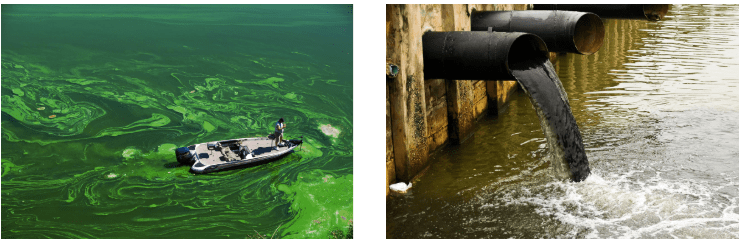
Most of the problems related to the broad topic of water pollution are already acknowledged and divided into sources of pollution, types of pollution and impact on environment, human health, marine life, etc. This acknowledgement and division can be executed as existing monitoring tools serve to identify and measure this pollution as well as state responsibility e.g the mapping tool of the groundwater pollution in Denmark provided by GEUS (GEUS, n.d.). However, according to our meeting (29.02.2020) with a senior consultant from DANVA, the association for danish drinking and wastewater companies, it is impossible to map all the actors and their responsibility in the danish water supply- and wastewater system.
To set the context, the responsibility of water pollution in Denmark is divided according to specific infrastructure and guidance (Danish Energy Agency, n.d.).
The majority of time responsibility is self-evident. However, in a few cases they are investigated separately on accounts of measurements. In order to establish the roots for a sustainable transition we have taken into account two groups of actors: industry (such as companies, factories, hospitals) and households (divided by municipalities). The industries are until a certain measurement not responsible for treating their wastewater- unless it contains hazardous waste – but are instead able to ‘act’ as a household and have the nearby water treatment plant do the work. However, this responsibility can change: if the wastewater emerging from an industry is too polluted they are no longer allowed to transfer it to the water treatment plant directly. Subsequently, they have two options : treating the wastewater themselves to stay under the maximum amount of pollutants accepted or pay the water treatment plant an extra fee to have them deal with the particularly contaminated wastewater (Miljø- og Fødevareministeriet, n.d.).
The water treatment plants are owned by the municipalities, who are responsible for not discharging polluted water into nature. This responsibility is carried out through regular monitoring and testing at the water treatment plants, who in turn have the responsibility to treat the incoming wastewater to such a degree it can be discharged into a nearby water body.
The danish water treatment system consists thus of routines of a strong system of dividing the responsibility of water, and also of water pollution. But what happens when the system faces new urgent problems? When the responsibility and the amount allowed before discharging aren’t clearly stated?
The system suffers under swift choices and a lack of knowledge: “There are therefore a number of uncertainties associated with the environmental risk assessment of pharmaceuticals due to lack of knowledge concerning their fate in the environment and impact on ecosystems and human health, and the effects of mixtures of pharmaceuticals and other chemicals.” (OECD Studies on Water, 2019)
It can, potentially, be years of error before the problem even forms itself as we have seen with the harmful externalities of CO2-emissions (Krugman, 2009), (IPCC, 2019). This is what the current water system is facing with emerging pollutants.
PHARMACEUTICALS AS EMERGING POLLUTANTS
What are emerging pollutants? Emerging pollutants are by NORMAN network described as: “.. pollutants that are currently not included in routine monitoring programmes at the European level and which may be candidates for future regulation, depending on research on their (eco)toxicity, potential health effects and public perception and on monitoring data regarding their occurrence in the various environmental compartments.” (NORMAN Network, n.d.).
Emerging pollutants are a wicked problem acknowledged by international policy frameworks. Within this framework, pollution by pharmaceutical contaminants in wastewater has been considered by our project team as a relevant window of opportunity to reopen the qualification of the current water treatment systems in Denmark and the high quality danish drinking water.
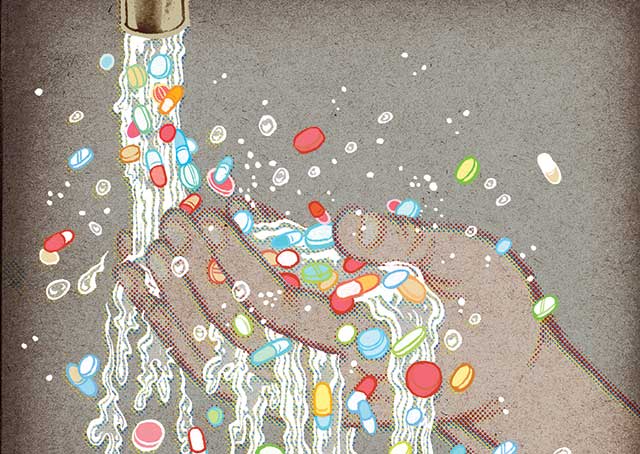
Pharmaceutical Compounds (PCs) come mostly from excreted urine and end-up in the sewage system. Since the consumption-use of PCs is increasing, it has become a growing problem as the design of conventional water treatment systems is not able to remove these compounds from the wastewater.
“The chemical and/or metabolic stability of some pharmaceuticals means that up to 90% of the active ingredient is excreted (or washed off) in its original form”(European commission, 2019).
“Conventional wastewater treatment facilities generally have activated sludge processes or other forms of biological treatment such as biofiltration. These processes have demonstrated varying removal rates for pharmaceuticals, ranging from less than 20% to greater than 90%.” (World Health Organization, p10, 2012).
The first value gap is seen through the inefficiency of the current water treatment systems to treat this emerging pollutant. In addition, the pharmaceutical contaminants pose not only a threat to the quality of our water bodies and aquatic species, but it could potentially also have a harmful effect on human health through our groundwater.
The contemporary long term vision with the pharmaceutical issue does currently have uncertain consequences. The different risk assessments are still being processed but scientific literature and political reports have already acted on harmful effects of PCs to aquatic species behavior and to human health in the long term, e.g.; “male fish exposed to such concentrations of the main ingredient in the contraceptive pill may become feminised as a result of its effects on the endocrine system, thus affecting the capacity of the population to reproduce.” (European commission, 2019).
The light on PCs within the theme of water pollution has introduced the limit of “perfect worlds” established in Denmark: the world of a strong water pollution management. The world of high-quality tap water in Denmark coming from sustainable groundwater. Shifting towards the recognition of resistant unknown compounds in the water flow has, in another hand, helped to build the foundation for new sustainable transition approaches. Indeed, since the PCs are qualified as emerging pollutants we acknowledge that emerging issues with unknown consequences are new mandatory notions to integrate into a sustainable water management portfolio. This qualification also shows a first shift in the pharmaceutical world. How can PCs, used for health-care purposes, be unhealthy for the aquatic environment and human health?
ASSESSING THE ISSUE: EMERGENT AND URGENT?
If PCs are emerging pollution it is also qualified as an urgent pollution :”an urgent, global health crisis that is projected to cause more deaths globally than cancer by 2050” World Health Organisation, (OECD Studies on Water, 2019) . Considering the timeline needed to acknowledge the harmful CO2 emission externalities and since we know that Climate Change creates increasing warning steep curves in the ecosystem resilience, it is urgent to assess the nature and the speed of the transition. “how transitions can be governed concerns the role of intermediary actors who can actively facilitate and speed up transitions (Hargreaves et al., 2013; Kivimaa, 2014; Barnes, 2016).” (Köhler et.al, p12, 2017). PCs as emerging pollutants open new uncertainties of how to drive water pollution management and which vision to adopt : the research is currently in a risk assessment phase: “88% of human pharmaceuticals do not have comprehensive environmental toxicity data” (OECD Studies on Water, 2019). Policies don’t know yet how to use these results to act efficiently in a multi-level perspective (Geels, 2002) even if monitoring tools and new policies have been developed to find different methods to assess the risk of these “hazardous substances” with less uncertainties.
Since it can not be removed by conventional treatment, this issue combines different problems regarding the sustainable transition agenda: the deeply embedded sewage infrastructure is too costly to change or repair, the production-consumption chain of medicine is growing every year and the lack of hot spot for monitoring the water: “Another reason is that monitoring of pharmaceuticals in the environment is very limited, although selected substances are monitored in surface and ground-waters under the Water Framework Directive.” (European commission, p7, 2019).
The combination of these problems as well as the acknowledgement of strong risk assessment of the impacts on the environment and human health shows a breakdown that we want to adress.
TACKLING PHARMACEUTICAL CONTAMINANTS IN A LOCKED-IN SYSTEM
Significant levels of pharmaceutical substances in the wastewater, which can not be treated by the current water treatment plants, face new transition challenges: Should we start by monitoring these amounts of new pollutants in order to mitigate this amount in a second stage? Could we just remove it through the implementation of innovative treatments? Or is it possible to prevent the medicine from ever reaching the wastewater. Are there any other perspectives?
Ceshin reminds us of the challenge for the designer: “How can lessons from transition studies be integrated into design? What role can designers play in initiating, supporting and orienting sustainable changes at the socio-technical system level? What design approach and capabilities do designers require?’ (Ceschin, p5, 2014).
As a Sustainable Design Engineer sustainable transition theories help us to set different angles to look at the same object issue, here the PCs pollution (Köhler et.al, 2017). As a designer we are able to use or combine each theory in order to reach our vision.
According to the Sustainable Transition Research Network’s framework, we believe that a multi-level perspective will help us gain a picture of the current regime and the routines therin, while practice theory may contribute to understanding and eventually changing said routines. Transition management will provide us with the necessary framework to define a vision and viable transition possibilities, as well as mapping and conduct our route towards this through tactical and operational activities.
It is really useful especially when the current regime asks for new methods and new incentives in order to enable its sustainable transition.
From the European Commission report the following challenges are identified actions to be taken, encourage innovation to address the risk, and do not jeopardize the effect on human health.
However we can see through the conference of IWA-LET (International Water Association, 2019) that there is still a strong focus on Technology treatment. It needs to be reframed that technology is one component of the “machine process” of Sustainable transition. According to Geel; “Technology, of itself, has no power, does nothing. Only in association with human agency and social structures and organisations does technology fulfil functions. It is the combination of ‘the social’ and ‘the technical’ that is the appropriate unit of analysis. “ (Geels, p2, 2002).
Some companies have already started to disassemble the stability of the current system, by implementing solutions aimed at targeting these pharmaceutical contaminants:
- Grundfos has created the Biobooster, a decentralized wastewater treatment based on a membrane reactor technology for industry, hospitals and municipalities. The innovative part lies within the decentralization attribute – water can be cleaned everywhere. “Decentralised wastewater treatment for water reuse” comes in conflict with the component of wastewater treatment plants which is less efficient and attached to an inconvenient specific location.
- A consortium consisting of Aarhus University Hospital, Herning and Aarhus water utility companies, the Danish Technical Institute, Krüger, the Technical University of Denmark, Aarhus University and Air Liquide take into account another criteria: prioritizing the main source of the pollution: only 4% of pharmaceuticals are consumed in hospitals against 96% from households. “With the growing popularity of outpatient care, the number of patients monitored at home by Aarhus University Hospital rose by 34% on average between 2007 and 2015. As a direct consequence, pharmaceutical pollution is no longer limited to the hospital’s wastewater.” (Veolia, 2018). They developed the MBBR (Moving Bed Biofilm Reactor) technology. A biological treatment technology that relies on microorganisms that grow on plastic media. Regarding the process, they are developing special “skills” for treating pollution that is not readily biodegradable.
The above mentioned examples demonstrate two solutions operating to eliminate the pharmaceutical contaminants in wastewater, rather than aiming for prevention, thereby acting as end-of-pipe solutions. While this strategy is one way to solve the issue with pharmaceuticals as emerging pollutants that’s already on the market, we have also chosen to look into another: the practices behind the use of pharmaceuticals.
A MICRO LEVEL PERSPECTIVE: HOW THE DESIGN OF PHARMACEUTICALS FAILS TO DESIGN SUSTAINABLE PRACTICES
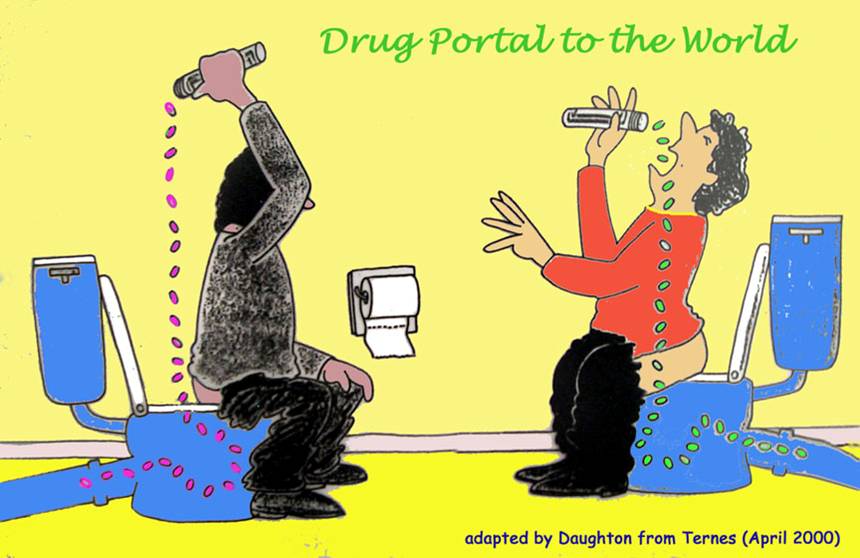
By their design, PCs resist other bacteria and have long resistance in their intended environment (the human body):
“Pharmaceuticals are designed to be stable in order to reach and interact with target molecules. This means that either they are very slow to degrade or their constant use leads to continuous release into the environment at rates exceeding degradation rates.” (OECD Studies on Water, 2019).
At the same time, we know that between 30% to 90% of PCs are secreted in the urine and then leaves the body as active substances (OECD Studies on Water, 2019).
Subsequently the same behavior and the same strength of the pharmaceuticals are kept when the PCs have reached the sewage system. As a result, it ends up in an environment it is not designed for and shows harmful side-effects. This design by itself, thus, reveals a weakness in the sense that its intended strength in the use phase results in a negative impact on water in the end-of-life phase. For that reason it is imaginable that a change in the composition of pharmaceuticals may be necessary in order to achieve complete prevention of pharmaceutical contaminants in the wastewater system.
Another way to achieve this, might be through understanding and alteration of the practices behind the use of pharmaceuticals. Here practice theory will be helpful to consider water pollution as a harmful object caused on a daily life level; through the use of medicine. Practice theory will provide a better understanding of the sources of practices as well as why and how these are strongly embedded in our daily lives by opening different patterns such as the practices of industries and people and the origin of their engagement with these practices.
“Practices that in themselves can be characterized as institutionalized producers and rules (Schatzki, 1996) thus come to institute particular dynamics across practices, be they professional or residential or related to consumption or provision.”(Jensen, p1099, 2017).
This way we might be able to use the intuitive cognitive as a bottom-up process to consider new practices to mitigate the use of PCs. Yet in order to do so an utilization of the top-down approach is necessary in order to understand the system and actors revolving PCs and the lock-in therein.
DISASSEMBLE THE PRACTICES BEHIND THE DESIGN
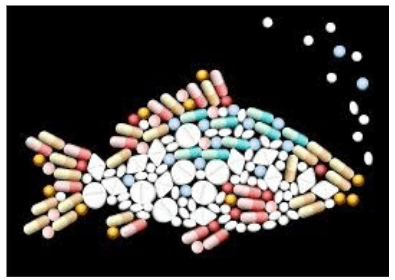
In the United States, it is estimated that about one-third of the four billionprescription items annually become waste (Product Stewardship Council, 2018), (OECD Studies on Water, 2019).
The design is embedded in a micro level of practices, as Gaziulusoy (2010) says, “design as a subject of transition is implicit. Similar to design indirectly influencing societal-level visions, it is assumed that societal level visions will influence design through the mediation of company strategy, as well.”
An idea for aiding the strategy of preventing pharmaceuticals in wastewater is investigating the design of packaging of medicine. Packaging of medicine follows a standard procedure and remains unadapted to the individual consumer. This often results in packages containing more medicine than actual necessity which in turn may lead to excess use or incorrect disposal.
Owing to this it is valid to look further into better, smarter packaging as a way to reduce the amount of pharmaceutical contaminants released from households.
“While leading on actions within its area of competence, the Commission will also encourage others to lead, including by facilitating the exchange of best practices.” (European commission, 2019).
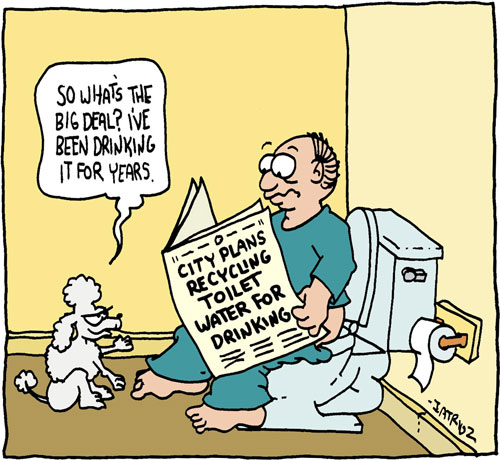
Facilitating the exchange of best practices is designing for new engagement and interest between key stakeholders. If we could pursue our vision in the “smarter packaging” or “no-packaging” we could in fact link key partnerships. Reaching the pharmaceutical sector which aspires to become more sustainable, reaching the citizens of Denmark in order to keep their international green reputation, and why not create a new path toward the toilet-to-tap drinking water paradigm. After all, “The pharmaceutical sector is a vibrant industry, with a drive to innovate. Such innovation could support “green design”, for example the development of products that pose a lower environmental risk or facilitate the recycling of waste water, and promote the use of greener manufacturing methods.”(European commission, 2019).
REFERENCES
Carabin, A., 2016. Pharmaceuticals in water: A relevant issue for developing countries?. [online] Available at: <http://ecoloodi.org/en/pharmaceuticals-developing-countries/> [Accessed 22 March 2020].
Ceschin, F. (2014). How the design of socio-technical experiments can enable radical changes for sustainability.
Danish Energy Agency. (n.d.). Water. [online] Available at: <https://ens.dk/en/our-responsibilities/water [Accessed March 18. 2020]
Denchak, M., 2018. Water Pollution: Everything You Need to Know. [online] Available at: <https://www.nrdc.org/stories/water-pollution-everything-you-need-know> [Accessed 22 March 2020].
European commission. (2019). European Union Strategic Approach to Pharmaceuticals in the Environment. Retrieved from https://ec.europa.eu/environment/water/water-dangersub/pdf/strategic_approach_pharmaceuticals_env.PDF
Gaziulusoy, A. İ. (2018). Postcards from “the edge”: toward futures of design for sustainability transitions. Cuadernos del Centro de Estudios en Diseño y Comunicación Nº73, 19, 67-84.
Geels, F. W. (2002). Technological transitions as evolutionary reconfiguration processes: a multi-level perspective and a case-study. Research policy, 31(8-9), 1257-1274.
GEUS, (n.d.). Groundwater analyses. [online] Available at: <http://data.geus.dk/geusmap/?mapname=grundvand&lang=en#baslay=baseMapDa&optlay=&extent=221477.6562506446,5998616.138898391,1052317.9340284225,6434775.861120613&layers=jupiter_bor_vandfors_almen_ws&filter_0=usikkerhed_m.num%3D%26kommunenavn.part%3D [Accessed March 18. 2020]
International Water Association. (2019, Spring 6). 16th IWA Leading Edge Conference on Water and Wastewater Technologies (LET). Retrieved from https://iwa-network.org/news/iwa-let-2019-environmental-challenges-need-water-technology-innovation/
International Panel on Climate Change (IPCC), (2019). Changing Ocean, Marine Ecosystems, and Dependent Communities. [online] Available at: <https://www.ipcc.ch/srocc/chapter/chapter-5/ [Accessed March 22. 2020]
Jensen, C. L. (2017). Understanding energy efficient lighting as an outcome of dynamics of social practices. Journal of Cleaner Production, 165, 1097-1106.
Köhler, J., Geels, F., Kern, F., Onsongo, E. and Wieczorek, A., 2017. A research agenda for the Sustainability Transitions Research Network. Sustainability Transitions Research Network (STRN), Sustainable Consumption Institute, University of Manchester: Manchester, UK
Krugman, P. (2009). How did economists get it so wrong?. New York Times, 2(9), 2009
Miljø- og Fødevareministeriet, n.d. Industrispildevand. [online] Available at: <https://mst.dk/natur-vand/vand-i-hverdagen/spildevand/spildevand-i-kloakken/industrispildevand/> [Accessed 22 March 2020].
Moloney, E., (2018). The Fate of the Flush: The Effects of Pharmaceuticals on Our Seas. [online] Available at: https://www.illinoisscience.org/2018/05/the-fate-of-the-flush-the-effects-of-pharmaceuticals-on-our-seas/ [Accessed March 22. 2020]
NORMAN Network, n.d. Emerging Substances. [online] Available at: <https://www.norman-network.net/?q=node/19> [Accessed 22 March 2020].
OECD Studies on Water. (2019). Pharmaceutical Residues in Freshwater Hazards and Policy Responses. Retrieved from https://www.oecd-ilibrary.org/sites/c936f42d-en/1/2/1/index.html?itemId=/content/publication/c936f42d-en&_csp_=b266ad337cb0072a055e092f619d28d8&itemIGO=oecd&itemContentType=book#intro-d7e21253
Paradela, T., (2018). Toilet to Tap – Not as Horrendous as You’d Think!. [online] Available at: https://sites.sandiego.edu/sdpollutiontrackers/2018/05/09/toilet-to-tap-not-as-horrendous-as-youd-think/ [Accessed March 22. 2020]
Scudellari, M., 2015. Drugging the Environment. [online] Available at: <https://www.the-scientist.com/features/drugging-the-environment-35077> [Accessed 22 March 2020]
Sifferlin, A., 2017. Here’S How Many People Die From Pollution Around The World. [online] Time. Available at: <https://time.com/4989641/water-air-pollution-deaths/> [Accessed 22 March 2020].
Veolia. (2018, April). Eliminating drug residues in municipal wastewater. Retrieved from https://www.planet.veolia.com/en/drug-residues-wastewater-treatment-denmark
World Health Organization. (2012). Pharmaceuticals in drinking-water. Retrieved from https://apps.who.int/iris/bitstream/handle/10665/44630/9789241502085_eng.pdf;jsessionid=71C0DF8979EDE34CAFD31B1BBB872478?sequence=1
 Sustainable Transition